Energy Drinks: An Anthropology of Evil
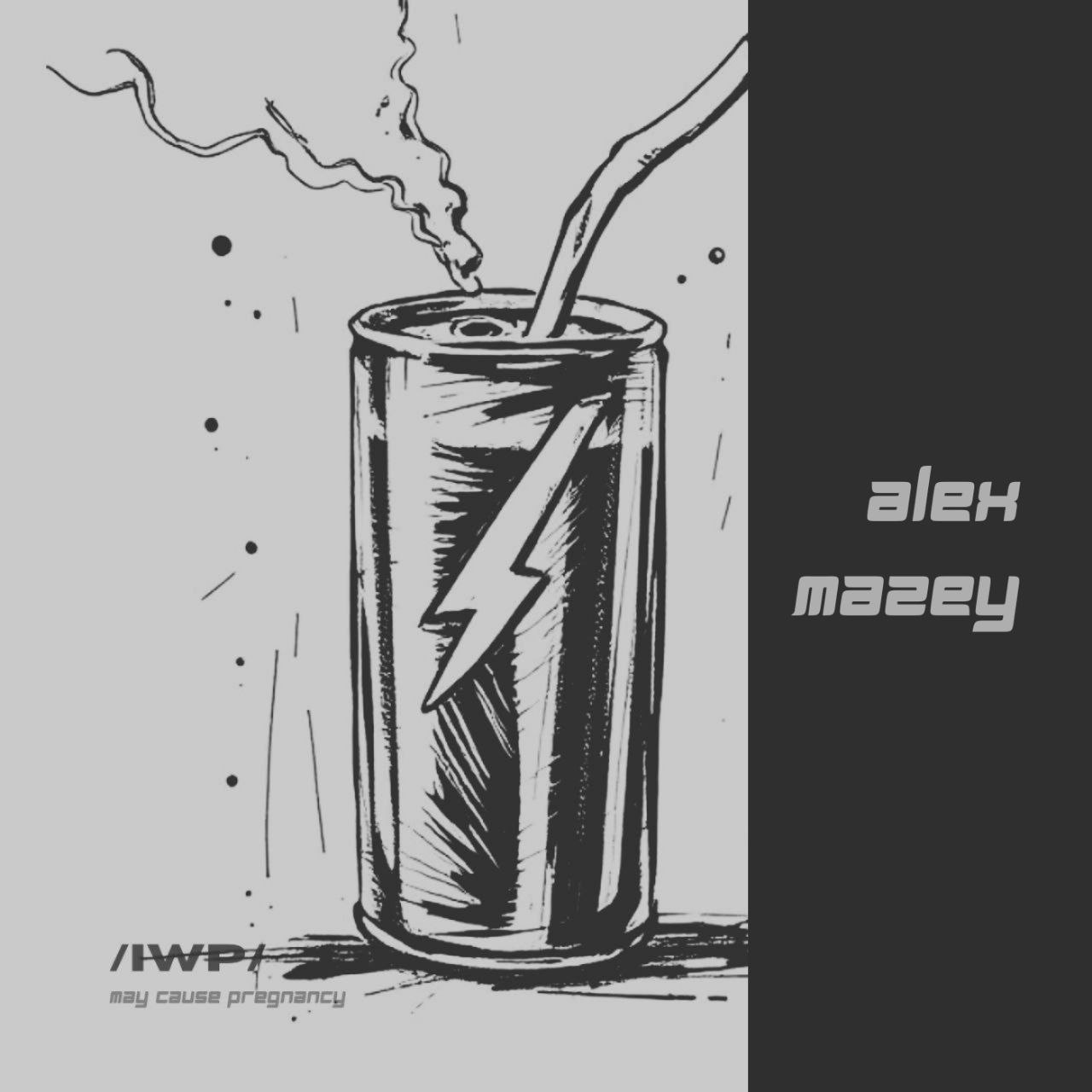
There’s a line in the $uicideboy$ track, ‘ARE YOU GOING TO SEE THE ROSE IN THE VASE, OR THE DUST ON THE TABLE?’ where the lyricist, Ruby da Cherry, relays his experience of ‘Percocet amnesia’, which always reminds me of the first time I tried the original flavour of Monster Energy. I can’t remember what the original flavour of Monster Energy tastes like which might be the natural consequence of having drank too much of it. Thinking about it now and I still can’t place the exact moment I tried the original flavour of Monster Energy, but I definitely tried it, and I’m pretty sure it tasted like shit.
The fact that the original flavour tasted pretty bad is the only part I really remember when it comes to my lived experience with Monster Energy’s flagship product. I’d like to stress here that making your flagship product taste like shit is actually a clever marketing technique since it is, in many ways, the satanic inversion of what Coca-Cola did. That is to say, every Coca-Cola adjacent product is actually designed to taste inferior to the original flavour in order to reinforce the mythological pedigree of the flagship product.
Practically everyone I have talked to about this (which must, at this point, represent a good cross-section of society) places Coca-Cola in a glass bottle as the superior version of Coca-Cola, despite them supposedly using the same recipe for all of their products. In fact, I have found that you can pretty much judge a person’s aesthetic sensibilities based on their hierarchy of Coca-Cola preferences. For example, you can almost guarantee that most people are going to tell you that glass bottle Coca-Cola is better than plastic bottle Coca-Cola. This is a universal truth.
“It’s fascinating that Monster Energy drinks have had more success in appearing cute than scary, suggesting that horror itself lies closer than we expect to the experience of cute.”
Most people don’t know why they prefer a glass bottle over a plastic one but I suspect it has something to do with the way glass — as a material — refrigerates better than plastic. By the time you’ve got a cold bottle of Coca-Cola in your hand it just feels materially better — heavier — more substantial somehow. In many ways a cold bottle of Coca-Cola has the same appeal as a cold bottle of beer, except a glass bottle of Coke remains more sophisticated than a beer, less exhausting, more bourgeois. In fact, the glass bottle variant of Coca-Cola might be the classiest of all drinks I’ve written about over the years — more so than even a garishly contemporary product like Trip — simply because a glass bottle of Coke remains unassuming, whilst at the same time knowingly expensive. Everyone knows it’s just regular old Coke, but there’s a premium attached to it, which is to say, the glass bottle is a kind of lowkey flex when compared to a plastic bottle which always makes the Coca-Cola taste worse somehow. There is a unique quality to the glass bottle in the sense that it is, in some special way, a *rare* product that successfully embodies the sign-value of the overpriced.
It’s interesting to me that some people not only disagree with this assessment but — worse still — have never even thought about Coca-Cola at ANY length. That’s right. There are people out there — walking around — who have never once placed their Coca-Cola preferences into any pre-established hierarchy: glass bottle coke, slim-canned coke, Nando’s Unlimited Coke. They’ve really gone through life having never considered it at all.
This is all to say that there are more people, I suspect, who are drawn to trying Coca-Cola Regular than there are people drawn to trying, say, Coca-Cola Inspired by AI (they really did this). This is, once again, the opposite case for Monster Energy whose demographic is likely made up of people more drawn to trying one of their fruitier flavours than their flagship product. It is a flagship product whose casually unnerving green on black design embodies this strange, aesthetic cohabitation of the scary shaken up into the ubiquitously banal. I’ll add here that the Original Monster Energy looks like something that ought to be chopped up and buried at a crossroads which is ironic when you walk past a crossroads to see them half-buried, littering the verges of roads and pathways. I think it’s fascinating that Monster Energy drinks have had more success in appearing cute than scary, suggesting that horror itself lies closer than we expect to the experience of cute. Perhaps this is the result of a naturally occurring dichotomy. Certainly, Sanrio characters like the increasingly popular, Kuromi, embody the miscibility of both.
"I felt things. Not normal things. Deep, cosmic things where I became palpably aware not to consume Red Bull if I was pregnant or spiritually vulnerable…"
I suppose if you want another drink that stands in opposition to both Coca-Cola’s strategy of flagship superiority and Monster Energy’s fruity proliferation, then the obvious choice would probably be Red Bull whose entire marketing gimmick rests upon how aesthetically stagnant their whole design has become over the years. In some parts of the world Red Bull has segued into the appearance of the pseudo-pharmaceutical in an attempt to appear more legitimately positioned in the beverage market when compared to other ‘immature-looking’, caffeinated drinks. In truth, in might be the case that Red Bull is eviler than Monster Energy in the way Red Bull exudes the same heat of a brazen bull; the Molochian energy of sending children through the fires of a bull demon. At the very least, I feel like Red Bull walked so Monster Energy could run. I guess, thinking about it now, when I was growing up there were two caffeinated beverages that existed, Nescafe and Red Bull. I was scared of Red Bull as a kid in the same way I imagine young children look up at their parents drinking Monster Energy this day and age and think, damn, mum’s gotta be a satanist or something.
As a kid I’d see other children my age drinking Red Bull out of those unmistakably cool — slim — aluminium cans and think they were out of their minds for drinking from something that resembled a nitrous oxide canister. I distinctly remember seeing this one girl drinking Red Bull at a New Year’s party and thinking she must have been drinking alcohol or something. I remember telling her off for drinking alcohol underage because that was the kind of child I was. She turned to me — said it wasn’t alcohol — and then called me a dummy because I didn’t know what Red Bull was back then — I was just trying to protect a girl I liked. And so, I guess it was just this drink I wasn’t allowed to try for whatever reason, and so for the longest time I thought Red Bull was just some new-fangled variant of alcohol because it came up around the same time alcopops were being aggressively marketed in a way that made them appealing to children. In the end — trying it as a kid — I felt cheated that it didn’t give me wings like the cartoon on television, but at the same time, I felt things. Not normal things. Deep, cosmic things where I became palpably aware not to consume Red Bull if I was pregnant or spiritually vulnerable — in fact, thinking about it now I remember there was a kid at my school who was really fast — both in math class and on the playground — and he used to tell us other kids that it was because his mum drank Red Bull while he was gestating in the womb. He said his mum drank so much Red Bull that the doctor’s said his amniotic fluid was just Red Bull. I don’t know how true that was. Yeah, that might’ve been a lie actually — he’s in jail now.
“Energy drinks…operate on the basis of speculation: one consumes a drink not to be awake but to forestall collapse, not to resolve exhaustion but to render it an unfulfilled threat, perpetually postponed.”
I suppose my intuitional fear for Red Bull hasn’t diminished over the years because I’m still a nerd. Actually, thinking about it now, perhaps the paranoia I once exhibited for certain energy drinks has only increased with the arrival of those coffee replacement drinks I recently saw advertised on YouTube. I’m referring specifically to the kind of expensive mushroom coffee that contains cordyceps. I always thought cordyceps was the fungus that caused the zombie outbreak in The Last of Us but according to WebMD, the side effect of zombification is just a common misconception. Either way, I ain’t drinking that shit, not because I’m scared (I am), but because this one advertisement I watched in its entirety — temporarily denying the five-second skip button — claimed that it would help me talk to women, which simultaneously made mushroom coffee seem incredibly incel-coded.
It used to be nootropic teas would promise you a psychedelic experience, (at the very least they’d promise you a twelve-hour boner), but now they just helped you act like a human being. In many ways I found this appeal to the libidinal effect of the mushroom blend to be a dog whistle of sorts to a generation of crypto bros hooked on Andrew Tate; a caffeinated version of get-rich-quick in which a vulgar distillation of the energy drink became less about providing energy and more about integrating the consumer into the economic and semiotic machinery of optimisation. At the same time the iconography of mushroom coffee operated within this paradoxical space of ‘futuristic innovation’ simultaneously tied to the product’s character of ‘naturalistic return’, of the natural, of the ‘more organic than coffee’. As such, it appears to me, at least, that mushroom coffee operates within that larger framework of what Jean Baudrillard describes as the disappearance of the real in which the body’s rhythms — wakefulness, fatigue, rest — also become subordinated to a logic of continuous deferral.
Energy drinks, like the hyperreal spectacle of contemporary finance capitalism, operate on the basis of speculation: one consumes a drink not to be awake but to forestall collapse, not to resolve exhaustion but to render it an unfulfilled threat, perpetually postponed. It is for this reason that mushroom coffee was also advertised on the basis of speculation, of listing five or so of “the hundred reasons why” it was better than coffee; delivered through the language of possibility and opportunity. Interestingly enough, the hundred reasons why it was better than coffee never really needed any explanation because all that mattered was that one-hundred reasons why you should drink mushrooms existed and if you needed to hear any more than mushrooms made you better at talking to women then you were obviously a loser — maybe even stupid — because you wanna get better at talking to women, right?
Talking about women in this way was less about patriarchal reclamation, as is it is perhaps classically read, and more about negating the fact that men were being seduced (as they often are) by the other man with the product. At the same time, this advertisement strategy was clever in the sense that it mirrored how a certain demographic is not forced into productivity but seduced into it, invited to participate in their own exhaustion through the consumption of a product that promises not relief, but an ongoing engagement with the simulation of performance.